







In this era of airline partnerships and alliances it can be tricky to work out which flights earn the most Qantas or Virgin Australia frequent flyer points and status credits, and even which ones get you into the airport lounge.
Much of the time it comes down to the difference between a "marketed", "operated" or "marketed and operated" flight: in other words, which airline you paid for the ticket and which airline is doing the actual flying.
We'll explain using Qantas and its partner airlines as an example, but the same principles apply to Virgin Australia and its affiliates.
First up, "Qantas marketed" means you or your travel agent has bought your ticket from Qantas and it carries a QF flight number.
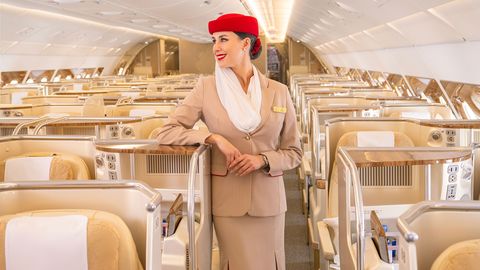
"Qantas operated" means the flight you're on is a Qantas plane with Qantas crew and Qantas service, but the ticket has been bought through another airline, such as Emirates. You might hear this referred to as "Qantas metal" – it's to do with which airline is flying the aircraft.
Here's the catch: thanks to what airlines call 'codeshare' flights, those are not always the same thing.
Let's say you buy a ticket from Qantas to travel from Sydney to Los Angeles on QF11. That's the daily Qantas A380 service, so you're on a "Qantas marketed and operated" flight.
However, under the new Qantas-Emirates alliance you can buy a ticket from Qantas to fly from Brisbane to Milan. That'll actually be on Emirates aircraft (for both the Brisbane-Dubai and Dubai-Milan legs), even though those flights will carry a QF number (airline people sometimes refer to these as "QF code" flights).
That's a "Qantas marketed" flight: it's a not an actual Qantas aircraft — it belongs to one of the Red Roo's partner airlines — but it carries a Qantas flight number.
QF3875 from Singapore to Helsinki is another example of a "marketed" flight: Qantas is selling it, but Finnair is doing the flying.
The magic words: when (and why) "marketed" and "operated" are important
Why should you care who's doing the flying, provided you get from A to B?
One reason is to know which business class seat you'll get, as illustrated by this rundown of the differences between Qantas and Emirates business class on their various aircraft.
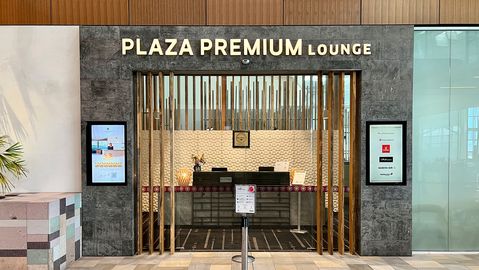
Another factor is lounge access, which depends on holding a ticket for a "marketed and operated" flight.
For example, if you're a Qantas Gold frequent flyer travelling on Qantas' daily A380 QF2 service out of London Heathrow Terminal 3 after April, you have a wide choice of lounges from Qantas along with oneworld partners such as American Airlines and Cathay Pacific due to reciprocal oneworld lounge privileges, and also with the Emirates lounge under the Qantas-Emirates alliance.
But if your ticket reads QF8002, you'll be travelling on the Emirates A380 flight to Dubai under a Qantas codeshare arrangement, and as such you won't be able to use the AA or CX lounges due to the oneworld rule that "you must be departing on a flight that is both marketed and operated by a oneworld member airline".
The difference? QF2 is "Qantas marketed and operated", but QF8002 is only a "Qantas marketed" flight.
And if your ticket says EK5102 — which means the Qantas A380 QF2 service to Dubai as an Emirates codeshare — it's the same story. EK5102 is only a Qantas operated flight, so once again, you can forget about oneworld lounge access.
Frequent flyer points and status credits are similarly tricky.
The general rule is you cannot earn on a partner airline's partner airline. (The key exception to that is when both are members of an alliance like oneworld — so ending up on an American Airlines plane as part of a Cathay Pacific ticket would net you Qantas points and status credits.)
Example: let's say you're a Qantas Frequent Flyer buying a Cathay Pacific ticket from Hong Kong to Beijing. Among all the flights Cathay sells, you have four combinations of marketing and operating airlines:
- CX390 (Cathay marketed and operated) would earn you points and status credits
- CX6872 (Cathay marketed, Dragonair operated) would earn you points and status credits, since Cathay subsidiary Dragonair is a oneworld affiliate
- CX6102 (Cathay marketed, Air China operated) wouldn't earn you anything
- CX6112 (Cathay marketed, Air Macau operated) wouldn't earn you anything either
Another example: if you booked Sydney to Shanghai with Qantas in business class as a Qantas Gold, you have four combinations of marketing and operating airlines:
- Qantas' own nonstop flight QF129 (Qantas marketed and operated) would earn you 11,006 points and 120 status credits.
- If you're flying via Hong Kong on QF127 and then to Shanghai on Cathay Pacific's CX368, you'd earn 10,308 points and 120 status credits to Hong Kong (Qantas marketed and operated), plus 974 points and 60 status credits (oneworld partner marketed and operated) on Cathay's Shanghai leg.
- The same would apply for Dragonair connections with the KA flight code from Hong Kong to Shanghai, since Dragonair is a oneworld affiliate.
- But if your onward leg to Shanghai were on Qantas' partner China Eastern (such as flight MU506), you'd earn 10,308 points but no status credits, because Qantas Frequent Flyer doesn't offer them on China Eastern flights — China Eastern isn't a oneworld airline.
You can appreciate how complex this can get, but also how easy it is to accidentally forego vital status credits which could make the difference between jumping from Silver to Gold or even Platinum.
So keep an eye out for which airline is marketing and operating the flight that you're being sold. Four digit flight codes (like QF8002 or CX6112) are often codeshares, so they're a hint you should take a second look!
For more real-world advice for the business traveller, follow Australian Business Traveller on Twitter: we're @AusBT.
About John Walton
Aviation journalist and travel columnist John took his first long-haul flight when he was eight weeks old and hasn't looked back since. Well, except when facing rearwards in business class.


1 on 30/1/13 by KG