Aircraft like the Airbus A380 superjumbo and Boeing's new 787 Dreamliner are an understandable drawcard for many travellers, but the plane you book to travel on isn't always what you end up with.
It's a situation brought into sharp focus with the recent rollout of the Boeing 787. Early adopters such as ANA, Japan Airlines, United Airlines and Qatar Airways saw travellers flocking to their 787 flights in preference to other aircraft.
All went well until some 787's were pulled out of service for an assortment of faults, leading up to this month's grounding of all Boeing 787s for battery checks – which in turn has seen Qatar postpone next week's planned debut of a Dreamliner on the daily Perth-Doha flight.
When the seat type changes
Last-minute changes to an aircraft can also affect the type of seat you'll get.
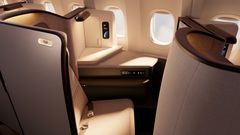
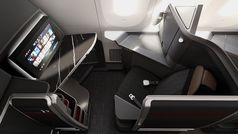
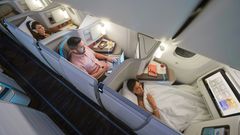
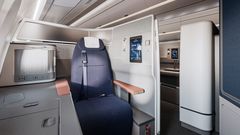
Let's say you booked a flight in business class on Qantas' Airbus A380, which is fitted with the Red Roo's fully flat Skybed Mark II business class seat — but the A380 is replaced by an older Boeing 747s sporting the less comfortable angled lie-flat Skybed Mark 1 in business.
(Yes, Qantas has upgraded nine of its 747s, but there are still nine remaining with the original seats.)
Of course, Qantas isn't the only airline where this happens — most large airlines have a variety of aircraft in their fleets and will swap planes for reasons ranging from mechanical difficulties to ongoing delays or simply just not enough passengers booked on a flight.
Bad news: airlines are not required to tell you, let alone to compensate you, when your plane changes from one type to another.
You're unlikely to get more than a token flight voucher that maxes out at a few hundred dollars, or a fistful of frequent flyer points if you're a member of the airline's program.
When it's more about the plane
Even before the recent stoush about the Boeing 787 Dreamliner's batteries, United was having a few Dreamliner dramas.
Having extensively promoted the Dreamliner flights and the aircraft's many benefits, thousands of United passengers booked their travel accordingly – only to arrive at the airport and find their promised 787 had been swapped for an older and much less exciting Boeing 777.
Cynthia Drescher, managing editor of travel mag Jaunted, was on one of those flights.
"I didn't know it had been swapped until I looked out the window at the gate, and I constantly check my flight details for changes," Drescher tells Australian Business Traveller. "Even the gate agents didn't know that it had happened — a 777 had just shown up instead."
"I later discovered that the plane that I was due to have — down to the registration number — had been out of service for several days."
And Drescher wasn't alone in her desire to fly the shiny new Dreamliner. She was astounded to discover how many of her fellow passengers also knew that they were missing out on the 787.
"When the swap came through, and everybody had their seat changes, everyone was talking about the fact that it wasn't going to be a 787. A high amount were well aware of what they'd booked."
So what should airlines do when they swap planes?
At the very least, passengers should be notified: the airline's system ought to spit out an email or an app notification informing you of the change.
After all, handing over your email address to the airline seems to result in any number of targeted sales emails, so it's not unreasonable that they also email you for something you may actually want to know about.
But is it also unfair to expect the opportunity to rebook without penalty onto the aircraft which you originally booked?
Many passengers will need to take their original flight, but others may prefer to shift their flight a day or two in order to get the better seat or just have the experience of flying the newer plane.
What should the airline do in cases like this? What's your experience been of airline notifications — not to mention rebooking and compensation? Share your knowledge with fellow travellers in a comment below.
About John Walton
Aviation journalist and travel columnist John took his first long-haul flight when he was eight weeks old and hasn't looked back since. Well, except when facing rearwards in business class.


1 on 23/1/13 by AusFlyer