





The new Passbook app in Apple's iOS 6 software for the iPhone and iPad, which provides digital versions of boarding passes, movie tickets and membership cards, could prove to be the first step towards Apple's all-encompassing iTravel ecosystem.
Airlines around the world have been fast on the uptake – among them Virgin Australia (click here to see how Virgin's passbook-friendly boarding pass system works).
Passbook also offers live updates to these e-passes, such as flight delays and changes to the airport boarding gate.
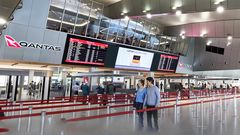
Mobile boarding passes are of course far from new, and we're also seeing some impressive apps from airlines – notably the Qantas app for Windows Phones.
But Apple's move to provide inbuilt support for mobile boarding passes doesn't only mean broader availability across airlines.
It also lays down a path to the iTravel era which Apple hopes will do for the travel industry what Apple’s iTunes Store did for the music industry – and seek to enthrone the iPhone and iPad as the traveller's tech of choice.
The world according to iTravel
A key feature of iTravel is to enable paperless ticketing and wireless check-in systems similar to Qantas Next-Generation Check-in.
Those and other RFID features would rely on short-range Near Field Communications (NFC) technology being built into the device, which means we might not see iTravel arrive until the release of an NFC-enabled iPhone 5 or iPad 4.
While Apple has not publicly discussed iTravel, a series of submissions the company had filed with the US Patent & Trademark Office began to appear in April 2010, with subsequent updates as Apple expanded on the app's capabilities and filed new patent applications.
The most recent of these is a patent granted to cover NFC-enabled transportation ticketing.
Mock-up iTravel screens included with the patent documents also show the app could be used to make bookings for flights, hotels, car rentals and even trains and buses (and help track and claim reward points along the way).
It's not unusual for Apple products to have long gestation periods, especially when they would rely extensively on integration with the non-Apple world of hotels, airlines, booking agencies and other service providers.
Here's a walkthrough of how Apple wants you to travel in the iTravel era, with the mock-up screens submitted by Apple to the US Patent & Trademark Office.
First, fire up your iDevice and make a reservation – and right away you can see how Apple could take a slice of the action from each booking.
This would not only give Apple enormous clout in the online booking world – imagine an ‘iTravel Store’ linked to airlines and partnering with online booking sites – but it would fill Apple’s coffers with a hefty slice of revenue from across the travel industry, in the same way that the company already takes a cut from music, e-books and apps sold online.
But Apple’s intentions don’t stop there. iTravel may well be the killer app for travellers, with ‘post-flight’ features including city guides, maps and details on restaurants, bars, shopping and sight-seeing.
Travel agents could also ensure their latest deals are pushed to you at any stage of the process.
Once your reservation is made iTravel begins to build your itinerary, which can also include bookings for hotel rooms and hire cars.
When you're ready to go, iTravels' pre-flight mode allows airlines to offer you upgrades shortly before your trip.
At the airport, your iDevice would provide a wealth of information and services.
It could also become a 'digital wallet' for providing identification.
Check in for your flight using an RFID-enabled iPhone or iPad, similar to the current Qantas and Air New Zealand systems.
Self-check baggage is also part of the deal...
... with your ticket and checked luggage matched up using wireless RFID.
Apple even want to provide some form of guidance through security.
But the experience doesn't stop once you reach the gate.
Apple sees iTravel as an interface to the airline's entire in-flight entertainment system.
When you're back down on the ground, iTravel steps in to offer its own city guide.
If you haven't already booked a hotel you can take advantage of last-minute specials, with the GPS system able to alert the hotel that you're en route so you can begin the check in process while you're still in the taxi or on the train.
And if you’re staying at an ‘iTravel-compatible hotel’ the app could handle everything from check-in to an in-room controller for the TV and stereo system, lighting, air conditioning, ordering room service and booking other hotel services such as an appointment at the spa.
Or, how about becoming a 'personal concierge' for booking dozens of other city-based activities?
Managing your rewards points is another of iTravel's capabilities.
There's also the chance of a desktop iTravel app, which could be used to build the itinerary and download it to your iDevice.
Apple routinely applies for patents on almost everything it thinks of, and not all of those see light of day.
But it's hard to imagine so much work going into iTravel, only for it to remain in Apple's sandbox, so hopefully this is an app we'll see in the next year or two..
[If you're keen to see even more on iTravel, check out these articles on Patently Apple and Tnooz.]
About David Flynn
David Flynn is the editor of Australian Business Traveller and a bit of a travel tragic with a weakness for good coffee, shopping and lychee martinis.


1 on 9/1/12 by djb